Logistics Pulse


This week's top news in trucking and logistics
The trade and logistics landscape continues to shift as policymakers refine tariff agreements, customs enforcement efforts intensify, and supply chains adjust to changing demand patterns. At the same time, import volumes remain elevated, freight markets continue to rebalance, and major retailers are investing in their networks.
Top articles this week:

Trump is shaking up customs rules. What should shippers know?
The Trump administration is pursuing changes that would increase customs enforcement and place greater responsibility on importers to ensure compliance. Proposed updates could affect importer-of-record arrangements, disclosure requirements, and how duties are assessed and collected. While implementation details are still evolving, the broader trend is clear: import compliance is becoming a bigger operational priority. Shippers that rely on complex sourcing or import structures may want to review their processes and partnerships as new rules take shape.
What would greater customs oversight mean for your current sourcing and import strategy?
Read more on Supply Chain Dive

EU gives final approval to install US tariff deal
The European Parliament has approved a trade agreement designed to stabilize tariff treatment between the U.S. and EU. The deal removes tariffs on many U.S. goods entering Europe while providing greater predictability for businesses operating across transatlantic supply chains. While trade policy uncertainty has not disappeared entirely, the agreement reduces the risk of a broader tariff dispute in the near term. For shippers, it offers a clearer framework for planning sourcing and trade activities across key markets.
What opportunities could emerge for your business if key trade lanes become more stable?
Read more on Supply Chain Dive

Container imports soar at busiest US port in May as buyers try to outrun rising fuel costs
Imports at the Port of Los Angeles reached their second-highest monthly level on record in May as companies accelerated shipments ahead of potential cost increases and trade uncertainty. Port officials expect volumes to remain strong through the summer as retailers and manufacturers continue to front-load inventory. The trend highlights how businesses are adjusting purchasing and transportation decisions in response to changing market conditions. For many shippers, securing inventory earlier may help reduce exposure to future disruptions or higher costs.
How are current market conditions influencing the timing of your inventory and transportation decisions?
In Other News:
Walmart plans $8M phase of Texas distribution center remodel
Walmart announced the next phase of an $8 million Texas distribution center remodel focused on efficiency and automation.
Read more on Supply Chain Dive
Coming weeks will see multiple factors reset ocean rates
Shifting demand, capacity, and geopolitical developments could influence ocean freight rates in the coming weeks.
Frontloading fuels early peak surge for Los Angeles
Inventory front-loading is contributing to an earlier-than-usual peak season at the Port of Los Angeles.
Cass sees freight volume recovery in second half of year
The latest Cass Freight Index points to improving freight demand later this year.
2026 State of Logistics Report: Volatility is the new normal
The 2026 State of Logistics Report highlights the growing importance of resilience and flexibility in supply chain planning.
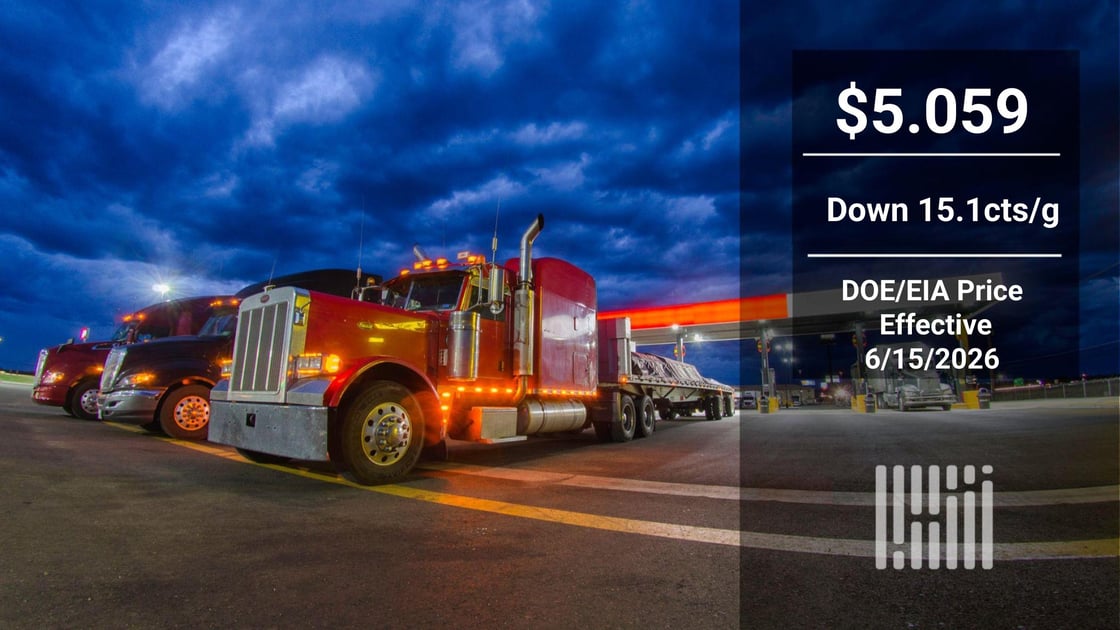
As diesel falls, key agency forecasts what's next following peace deal