

Logistics Pulse Newsletter—New Tools for Freight Transparency & Rising Market Risks
Welcome to Logistics Pulse
This week’s top news in trucking and logistics
This week’s freight news highlights a powerful mix of operational innovation, macroeconomic policy shifts, and global market volatility shaping how shippers plan and execute logistics. From product updates that improve cost control to evolving trade policy and energy supply risks that affect freight markets worldwide, the common theme is managing visibility and uncertainty. Whether you’re optimizing internal workflows or navigating rising costs and tariff exposure, these stories underscore the importance of clarity, agility, and strategic planning in supply chain operations.
Top articles this week
.jpeg)
A New Standard for Rebill Transparency in Freight
Mothership has launched a redesigned rebill and dispute experience in the Dashboard, built to give you unmatched visibility and control over post-shipment charges. Teams can now manage all rebills in one place, see detailed charge breakdowns with explanations and tips to prevent future fees, filter by dispute status and track progress in real time, and accept, pay, or dispute charges directly in the Dashboard. This new experience sets a benchmark for freight billing transparency, reducing friction, speeding resolutions, and giving teams the confidence to manage charges proactively. Billing shouldn’t feel reactive — it should be structured, clear, and fully in your control.
How would full visibility into post-shipment charges change the way your team manages freight?

US to hike global tariff to 15% ‘sometime this week,’ Bessent says
The administration is signaling potential tariff increases alongside renewed Section 301 investigations, reopening questions about sourcing strategy and landed cost stability. For importers, even the possibility of higher duties can trigger forward buying, inventory pull-forwards, or supplier diversification. That often leads to short-term volume surges at ports, followed by softer demand cycles — creating whiplash across trucking and LTL networks. Over the longer term, tariff shifts could accelerate nearshoring trends and deepen U.S.–Mexico trade ties. Shippers may need to model multiple cost scenarios while maintaining flexibility in distribution networks.
If tariffs change this year, how quickly could your shipping plans adapt?
Read more on Supply Chain Dive

The Strait of Hormuz crisis explained: What it means for global shipping
Tensions surrounding the Strait of Hormuz, a chokepoint for roughly a fifth of global oil shipments, are once again putting energy markets and shipping lanes on edge. Even without a full closure, the risk premium alone can push oil prices higher, which quickly translates into rising diesel costs and fuel surcharges for freight. Ocean carriers and insurers are also closely monitoring exposure, potentially adjusting routes, contracts, or pricing models. For U.S. shippers, the downstream impact could show up in both international freight rates and domestic linehaul costs. Volatility in one narrow waterway can ripple across trucking networks thousands of miles away.
If global shipping costs rise suddenly, how ready is your business to adjust?
Watch this week's top stories ▶️
Subscribe to our YouTube channel for weekly freight and logistics insights.


In Other News
US-Mexico trade hits new high of $872B in 2025
US-Mexico trade reached a new high, reinforcing the durability of North American supply chains and the growing importance of cross-border freight corridors.
Laredo secures $58M rail grant to speed up Texas border freight
New federal funding aims to ease congestion and improve rail fluidity at one of the busiest U.S.–Mexico gateways, a positive signal for long-term border efficiency.
Feds signal pivot on East Coast shipping speed rules
Regulators are reconsidering vessel speed restrictions, a move that could impact transit times, port velocity, and inland freight flows along the East Coast.
NAPA expands use of warehouse robots
NAPA is scaling autonomous warehouse robots to improve picking efficiency, another indicator that distributors are investing in automation to move inventory faster and leaner.
Read more on Supply Chain Dive
Iran conflict snarls 10% of world’s container fleet: ONE CEO
Ocean carrier leadership is signaling that geopolitical instability could influence rate dynamics, adding another layer of uncertainty to contract planning.
Read more on Supply Chain Dive
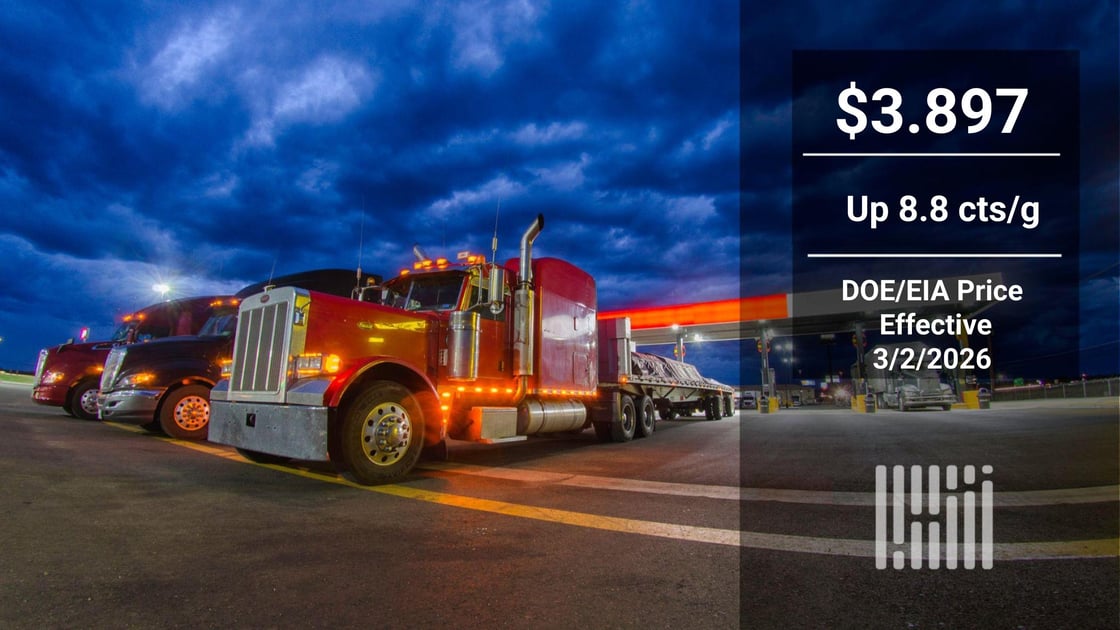
Diesel futures and retail prices power higher, outstripping gains in crude