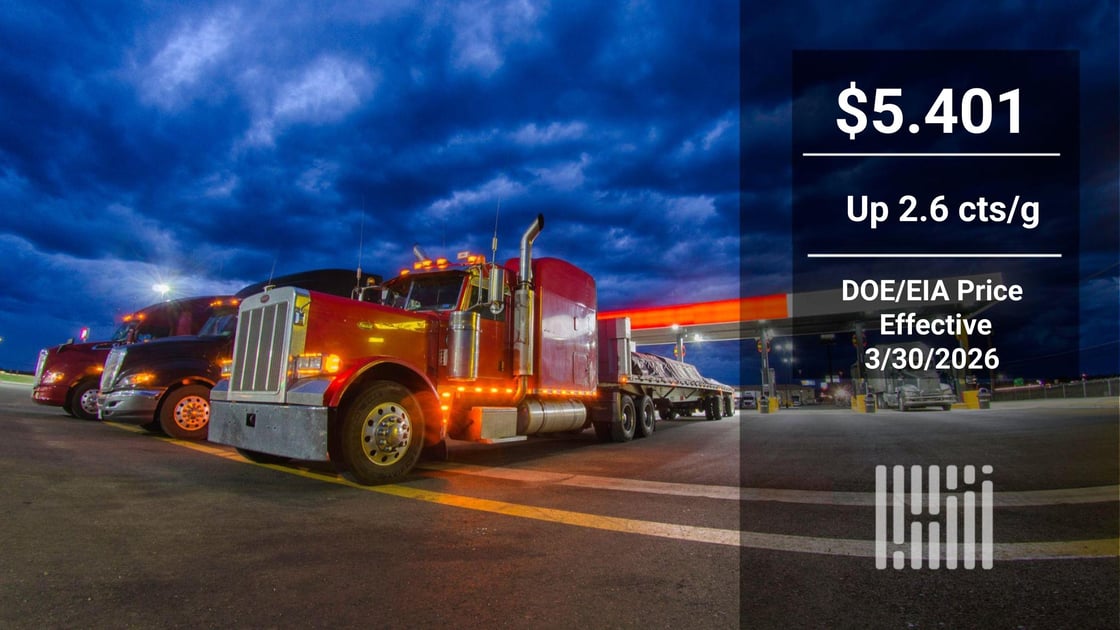
Logistics Pulse
Tariff Refunds, Fuel Volatility, and Market Shifts

This week's top news in trucking and logistics
Supply chains are shifting — but not all in the same direction. While external market conditions like fuel volatility and geopolitical risk continue to create uncertainty across the industry, a major tariff refund wave could put billions back into importers' hands, even as new tariff pressures begin to emerge. The result is a more complex environment for shippers: new opportunities for financial recovery, paired with ongoing variability in global logistics conditions.
Top articles this week:
CBP's tariff refund process will take up to 45 days to deliver returns
U.S. Customs and Border Protection is making progress on its system to issue refunds for IEEPA tariffs, but the process will be more conditional than it may appear. Refunds will only be issued after entries are liquidated or reliquidated, meaning timing depends on each shipment's status. Once accepted into the system, CBP estimates refunds could take up to 45 days to be delivered. The platform is still under development, and importers will need to actively submit claims through a new portal. In practice, access to funds will vary based on eligibility, timing, and execution
Do you know which of your entries are eligible, and how quickly your team can move once the claims process opens?
Read more on Supply Chain Dive
Oil supply crunch will worsen in April, IEA warns as it weighs releasing more strategic reserves
Oil markets remain on edge as geopolitical tensions continue to threaten key supply routes, particularly around the Strait of Hormuz. Even without a full disruption, the risk alone is enough to keep prices elevated — and that volatility is already flowing through to diesel and transportation costs. For shippers, this means fuel surcharges and rate pressure are likely to persist, even if demand remains soft. The bigger challenge is unpredictability: pricing is increasingly driven by geopolitical risk rather than traditional supply-demand fundamentals. That makes forecasting and budgeting more difficult, especially for high-volume shippers with tight margins. In this environment, stability is less about price levels and more about reducing exposure to sudden swings.
How are you planning for ongoing fuel volatility?
Trump administration prepares up to 100% pharmaceutical tariffs on some imported drugs
The U.S. is signaling a new phase of trade policy, with potential tariffs of up to 100% on imported pharmaceuticals aimed at reshoring production. While sector-specific, it reinforces a broader trend: tariff pressure isn't easing — it's evolving. For shippers, this extends beyond pharma, adding uncertainty to sourcing strategies, supplier diversification, and long-term planning. Shifting production takes time, creating a gap between policy and execution. The result is a more complex and less predictable trade environment.
How are you planning for continued trade policy changes?
Watch this week's top stories ▶️
Subscribe to our YouTube channel for weekly freight and logistics insights.

In Other News:
Efficiency at Scale: Why Your Shipping Strategy Needs a Centralized Address Book
Mothership's new Address Book helps teams save time and reduce errors by storing and standardizing key location details across every shipment.
U.S. 'monitoring' China retaliation against Panama ships
The U.S. is monitoring potential Chinese retaliation targeting Panama-flagged vessels, raising new concerns about delays and friction in global shipping lanes.
Gap feels confident about inventory levels, tariff mitigation
Gap reported success mitigating tariff exposure through sourcing and operational changes, highlighting how proactive strategy can offset policy-driven cost pressure.
Read more on Supply Chain Dive
Energy volatility continues to ripple across supply chains
Energy volatility continues to ripple across supply chains, impacting transportation costs, raw materials, and overall landed cost for goods.
Kohl's refines inventory management to improve allocation issues
Kohl's is tightening inventory and refining replenishment strategy, reflecting a broader shift toward efficiency and working capital control amid cost uncertainty.
Read more on Supply Chain Dive